

The enigma of Andy Flower - the forgotten test great
- The Nightwatchman
- Jun 25, 2019
- 4 min read

There is often a cloud hanging over what exactly defines batting greatness in cricket. Is it statistics and impactful performances or the popularity of the player due to his batting style alone?
If it’s the latter, it is highly subjective and more often achieved largely by coincidence like the player’s nationality, where and in the eyes of how many the player produces his most memorable performances. However, if the former is given more importance, the legend of Andy Flower would have been far more celebrated by now.
While there have been many dream teams for Tests from various cricketers and fans across the globe and a variety of analytic discussions on who is the best Test batsman/ cricketer of all time, not one of them have had the name Andy Flower even in the reckoning.
A look through his career numbers, however, suggests that the former Zimbabwe batsman was an enigma of the highest order. A staggering Test average of 51.54 in a career spanning almost a decade from 1992-2002, a decade where only the likes of Sachin Tendulkar, Brian Lara and Steve Waugh had an average of above 50. To further enhance and glorify Flower’s achievements, he was also the wicketkeeper of the team for 55 of the 63 Tests he played in.
Beyond the numbers, it is well known that among the great batsmen of his era, Flower played for one of the weakest teams – Zimbabwe. He came in to bat more often than not with the team a wicket down with the former Zimbabwe captain often the opposition team’s primary target.
To make it doubly difficult, he had to face this unenviable obstacle after having kept wickets for almost 100 overs given the huge scores most oppositions piled on against Zimbabwe.
Apart from the overall numbers that are often perceived greater due to averages being much higher at home or against a particular opposition or in a particular innings (either 1st or 2nd) of the match, Flower’s numbers in each of these categories are as balanced or better than any of the other contemporary greats.
A look at the numbers below in terms of home and away, against different oppositions indicates some staggering consistency.

The consistency in batting averages across so many categories is remarkable for someone playing for a team that was usually in trouble when he walked in to bat. It is also worthwhile noting that he faced the likes of Curtly Ambrose, Courtney Walsh, Wasim Akram, Waqar Younis, Anil Kumble, Javagal Srinath, Harbhajan Singh, Glenn McGrath, Shane Warne, and Muthiah Muralitharan at the prime of their respective careers.
To go along with his 12 centuries and an incredible average of 51 batting at No. 3, he also picked up 160+ dismissals as a wicketkeeper, making him the only cricketer with a 50+ batting average and 150+ dismissals as a wicketkeeper. Of batsmen who have completed 20 or more innings, only AB De Villiers has a higher test average as a wicket-keeper than Flower, from 61 less innings. Only Adam Gilchrist is close to an average of 50, with 47.60. For all the talk of Kumar Sangakarra challenging Gilchrist for the top place amongst wicket-keeper batsmen, he averages a mere 40.48, a mere 0.30 higher than former English keeper Matt Prior.
His finest series was in India during the 2000/2001 season where he scored 550 runs in two Tests. He was dismissed just twice with scores of 232* and 183*, in what was a rarely seen batting exhibition against spin bowling away from home.
He, along with Jonty Rhodes, was one of the primary architects of playing the reverse sweep to spinners that even lead to the Tendulkar famously quoting to Andy Flower during that series: “Why don’t you just play right handed”.
Some other noteworthy statistics:

Half of his 12 Test centuries ended in not outs as he was the last man standing due to the team’s inability to hang in, again highlighting the case of Flower being “the lone shining light all too often in the dark”.
He is also the only Zimbabwean and one of the few batsmen to be in the top 40 all-time greatest Test batsmen in ICC’s all-time Test batsman ranking in close company with two of the greatest batsmen of his era, BC Lara (ranked 23) and SR Tendulkar (ranked 29), thereby cementing his place as a contemporary batting legend in Test cricket. Flower also scored Test centuries against seven of the other nine Test playing nations namely India, Sri Lanka, West Indies, South Africa, Pakistan, England, Bangladesh in the 63 matches he played. He also has 16,000+ first class runs at a stunning batting average of 54.5.
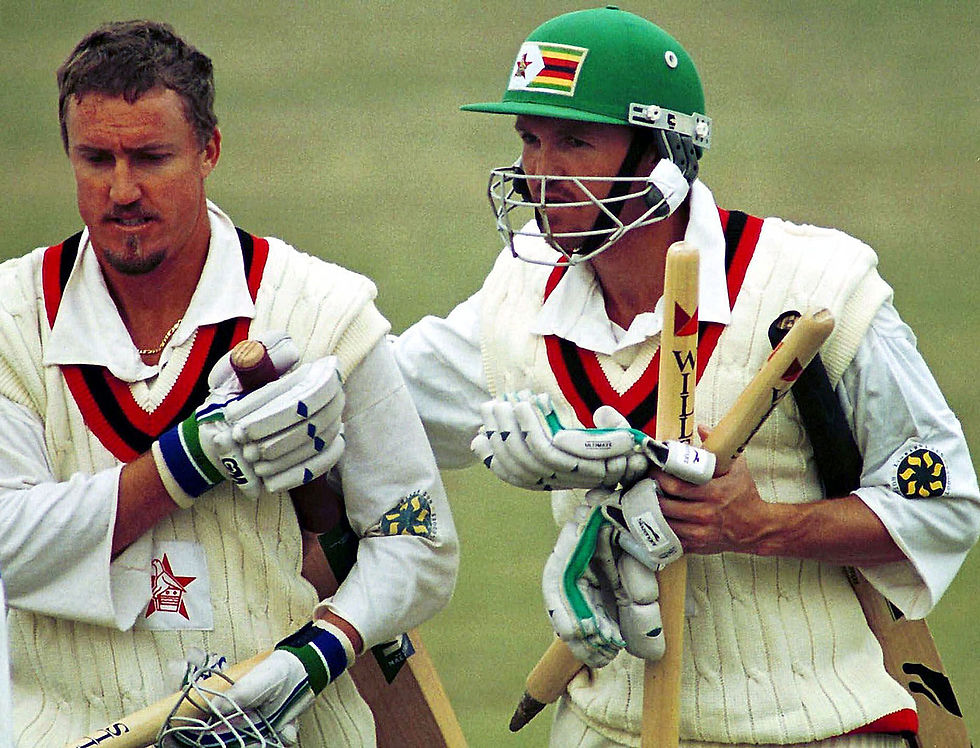
Whilst several other legends that are celebrated may have been the foremost reason for their respective nation’s cricketing performance, Andy Flower was the main reason that Zimbabwe was perhaps even on the cricketing map for as long. A look at Zimbabwean cricket now shows the massive difference between their performances during the Andy Flower-era and now.
Words such as ‘great’, ‘greatest’, ‘legends’ are often terms overused in sport for players less deserving at times. But one of the least celebrated and talked about legends in cricketing has to be Andy Flower, who not only led his team from the front but also dragged them along single-handedly.
Where does Flower rank amongst other test wicket-keeper batsmen?


As an Australian who lived in Zimbabwe for 8 years, I had the pleasure of watching almost all of the Test playing nations at Harare Sports Ground. I also had the honour of sitting next to Andy's dad, Bill during a Test match versus India.
I agree wholeheartedly with the comments in this article. Andy's figures speak for themselves. Not only did he play in a time when some of the greatest bowlers in history were playing against him, he did so with a better average than Gilchrist.
He was a very fine captain and an excellent wicketkeeper to boot.
He is certainly one of the all time greatest wicketkeeper batsmen in my books.